About / A little context

Curious about
the whole system.

I'm Htet, an Applied AI & Analytics student in Singapore. I enjoy building useful software and working with the data that informs it.

From interface
to internals.

My projects have taken me from an intergenerational social feed to a music video creation studio, a deep learning engine, interactive hospital dashboards, and workout prediction models.

I like understanding how those pieces fit together: how an interaction changes state, how data becomes a useful measure, and how to explain what a result supports. My work spans React and Python applications, Power BI reporting, KNIME workflows, and statistical analysis.

Based in
Singapore
Background
Diploma in Applied AI & AnalyticsNanyang Polytechnic, Singapore
Interested in
Software, applied AI & data analyticsProducts, data workflows, and decisions you can explain.

Focus, with evidence

What I bring to a project.

01 /

Interfaces that help

Make a workflow easier to understand and use, with attention to language, input methods, and clear feedback.

02 /

Workflows that hold together

Connect services, data, and human review so that a useful feature becomes a coherent end-to-end experience.

03 /

Internals you can explain

Work through the mechanisms beneath an abstraction, then make the reasoning and trade-offs inspectable.

How I approach the work

Make the reasoning
visible.

  1. 01

    Start with the person using it

    What are they trying to do? Where does the current experience make that harder?

  2. 02

    Follow the data through the system

    Be clear about what each component owns, how state moves, and where a decision is made.

  3. 03

    Check the decision, not just the demo

    Use tests and observable behavior to explain what works, where it falls short, and what should change next.

Leadership, mentorship & community

Beyond the code.

Organizing technical workshops, mentoring peers,
and connecting students directly with industry.

Executive Committee · Head of Publicity & Core Organizer

NYP AI Club

Member of the Executive Committee directing multi-channel outreach across Instagram, Telegram, Discord, and WhatsApp Community channels. Beyond publicity, I serve as a core organizer across the entire event lifecycle — leading concept ideation, authoring official administrative proposals, managing event logistics, and coordinating live on-the-ground execution.

Featured Masterclass: Powering the Future — Networks & AI by Nokia

Co-organized and spearheaded publicity for an intensive 2-day systems engineering masterclass (18 hours across 18–19 June) hosted in NYP Specialized Lab L.534, featuring Thomas Corre, Regional PLM & Consulting Engineer at Nokia (certified Google Cloud Professional Cloud Architect & Nokia Service Routing Architect). Curated for 51 selected diploma students with networking and AI backgrounds, the workshop explored how modern AI compute clusters rely on high-bandwidth Data Centre fabric topologies:

  • Data Centre Fabric & AI Infrastructure: Deconstructed spine-and-leaf topologies, non-blocking interconnects, and the networking throughput demands essential to training and serving large-scale distributed AI models without latency bottlenecks.
  • Hands-on Digital Twins via Containerlab: Guided students through spinning up and configuring enterprise-grade virtual network digital twins directly from the terminal.
  • Cloud-Scale Routing Protocols: Hands-on configuration of the core protocols underpinning modern cloud networks, implementing BGP (Border Gateway Protocol), EVPN (Ethernet VPN), and VXLAN (Virtual Extensible LAN) for scalable overlay/underlay fabrics.
  • Real-Time Telemetry & Observability: Implemented live streaming telemetry collection using gNMI (gRPC Network Management Interface), feeding live metrics into Prometheus and Grafana dashboards for automated network monitoring.
  • Practical Checkpoints & Nokia Certification: Mentored participants through multi-checkpoint lab challenges and end-of-day technical quizzes, validating lab configurations to award official co-issued Nokia e-certificates.

As Head of Publicity, I authored the official marketing collateral schedule in the proposal — coordinating lecturer-broadcast Outlook email blasts, cross-platform message blasts across WhatsApp (SIT Club 26/27), Telegram (NYP AI), and Discord, and authoring the high-converting Instagram campaign (@nyp_ai) highlighting Thomas Corre's industry credentials to fully book all 51 lab seats. On event days, I directed live photography and media documentation across both 9-hour sessions.
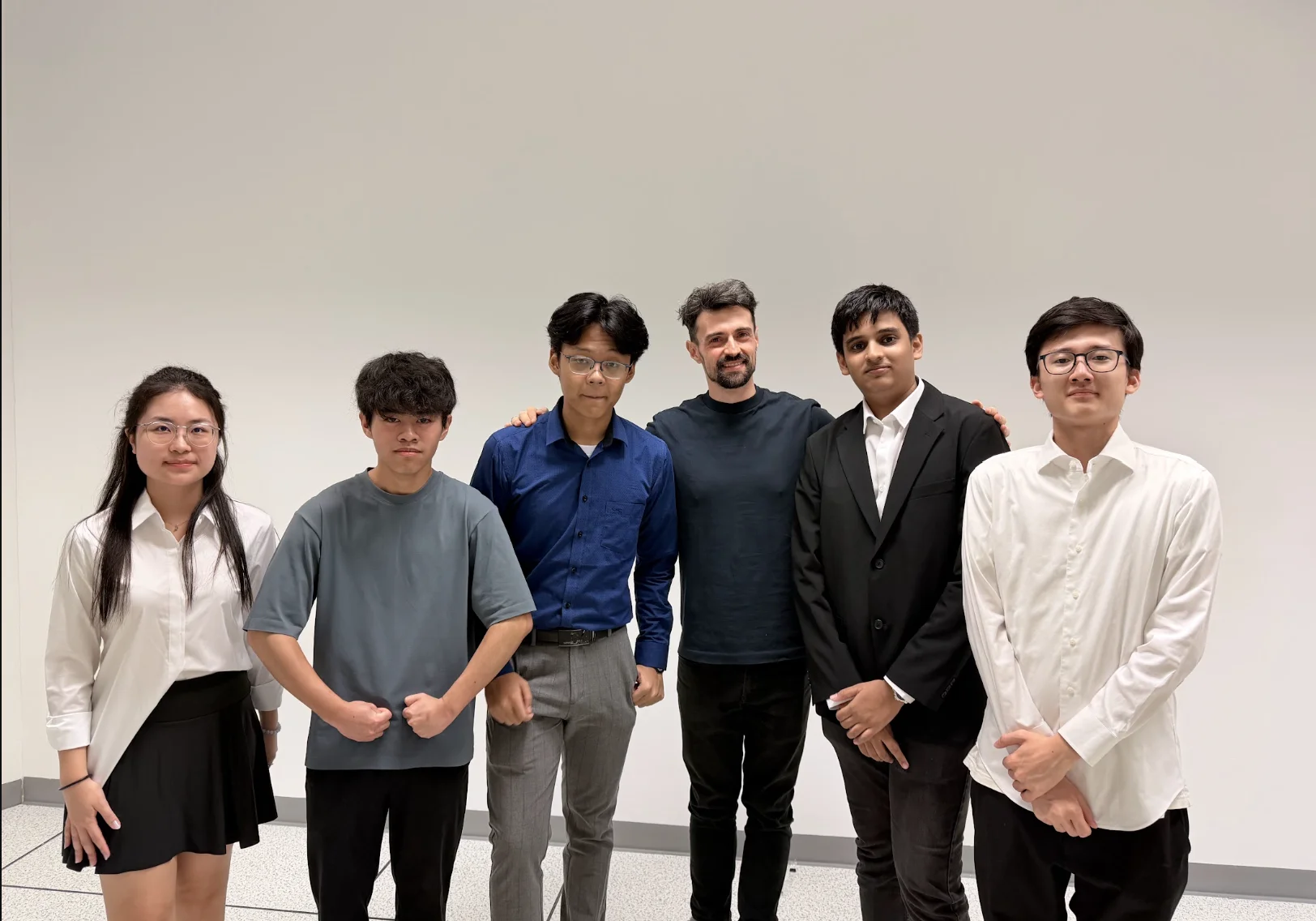
NYP AI Executive Committee with Nokia guest speaker Thomas Corre at the Networks and AI workshop
The NYP AI Executive Committee organizing team alongside guest speaker Thomas Corre (Nokia) at the conclusion of the 2-day Networks & AI workshop.

Flagship Engagement: Project Starbound (The AI Frontier)

Core organizer for the club's flagship 100+ participant orientation and engagement session, welcoming fresh cohorts through an immersive space-exploration theme. My contributions covered end-to-end management, ideation, and execution:

  • Ideation & Activity Design: Conceived the overarching galactic mission narrative and co-developed interactive learning challenges — including Galactic Consensus (structured debates on space-age AI ethics and algorithmic governance), Starfield AI (interactive machine learning quizzes), and The Nebula Hunt (a campus-wide cryptographic QR scavenger hunt across the School of IT).
  • Proposal & Operational Planning: Co-authored the official administrative proposal, established comprehensive run-of-show timelines and risk management protocols, secured venue bookings across the P1 Convention Centre and Block L, and directed dry-run rehearsals with facilitators.
  • Day-of Event Management: Supervised live operations, crowd control, timekeeping, and facilitator stations on event day to ensure seamless activity rotations and high participant engagement.
  • Multi-Channel Publicity Blitz: Designed and executed the campaign rollout across WhatsApp communities, Telegram channels, Instagram, School of IT display screens, and academic broadcast mailings.
Subcommittee Lead & Workshop Presenter

NYP Google Developer Group (GDG)

Lead developer initiatives and cloud architecture workshops, guiding student builders through modern containerization, infrastructure-as-code, and serverless deployment workflows.

Featured Workshop: Serverless Containers with Google Cloud Run @ NUS

Delivered a technical cloud architecture workshop hosted on-campus at the National University of Singapore (NUS). As one of two lead presenters, I taught and coached NUS university students through the mechanics of serverless containerization — guiding them step-by-step from raw source code and multi-stage Docker builds to production microservices running on Google Cloud Run.

  • Serverless Compute vs. Traditional Infrastructure: Contrasted the overhead of dedicated virtual machines (idle compute costs, manual OS patching, slow multi-minute autoscaling) against Cloud Run's request-driven pricing and automatic scale-to-zero capabilities. Analyzed architectural trade-offs across Google Cloud compute primitives — evaluating when to choose Cloud Run versus Cloud Run Functions (event triggers), Google Compute Engine (raw VMs), Google App Engine, and GKE Autopilot (complex multi-container orchestration).
  • Multi-Stage Production Dockerfiles: Broke down containerization best practices line-by-line, demonstrating a production multi-stage build: compiling the Single Page App inside a node:25-alpine builder container with pnpm frozen lockfiles (--frozen-lockfile) for deterministic builds, then packaging solely the compiled distribution into a lean nginx:alpine runtime with custom SPA routing fallback (try_files $uri $uri/ /index.html) listening on port 8080 to achieve minimal container images and rapid cold starts.
  • GCP Managed Service Pipelines & Terminal CLI: Coached attendees hands-on inside Google Cloud Shell through the command-line deployment workflow using gcloud run deploy --source .. Explained the critical GCP APIs invoked under the hood: Google Artifact Registry (artifactregistry.google.apis.com) for container image versioning, Cloud Build (cloudbuild.googleapis.com) for remote cloud compilation without local Docker daemons, and Cloud Run (run.googleapis.com) for managed ingress routing and automated autoscaling.
  • Services vs. Revisions & Operational Governance: Explained the core architectural distinction between persistent Services (stable public URLs) and immutable Revisions (version-controlled snapshots enabling blue-green rollbacks and traffic splitting). Covered regional deployments (asia-southeast1 Singapore), IAM unauthenticated invocation policies, and safe service teardown to manage cloud credits responsibly.
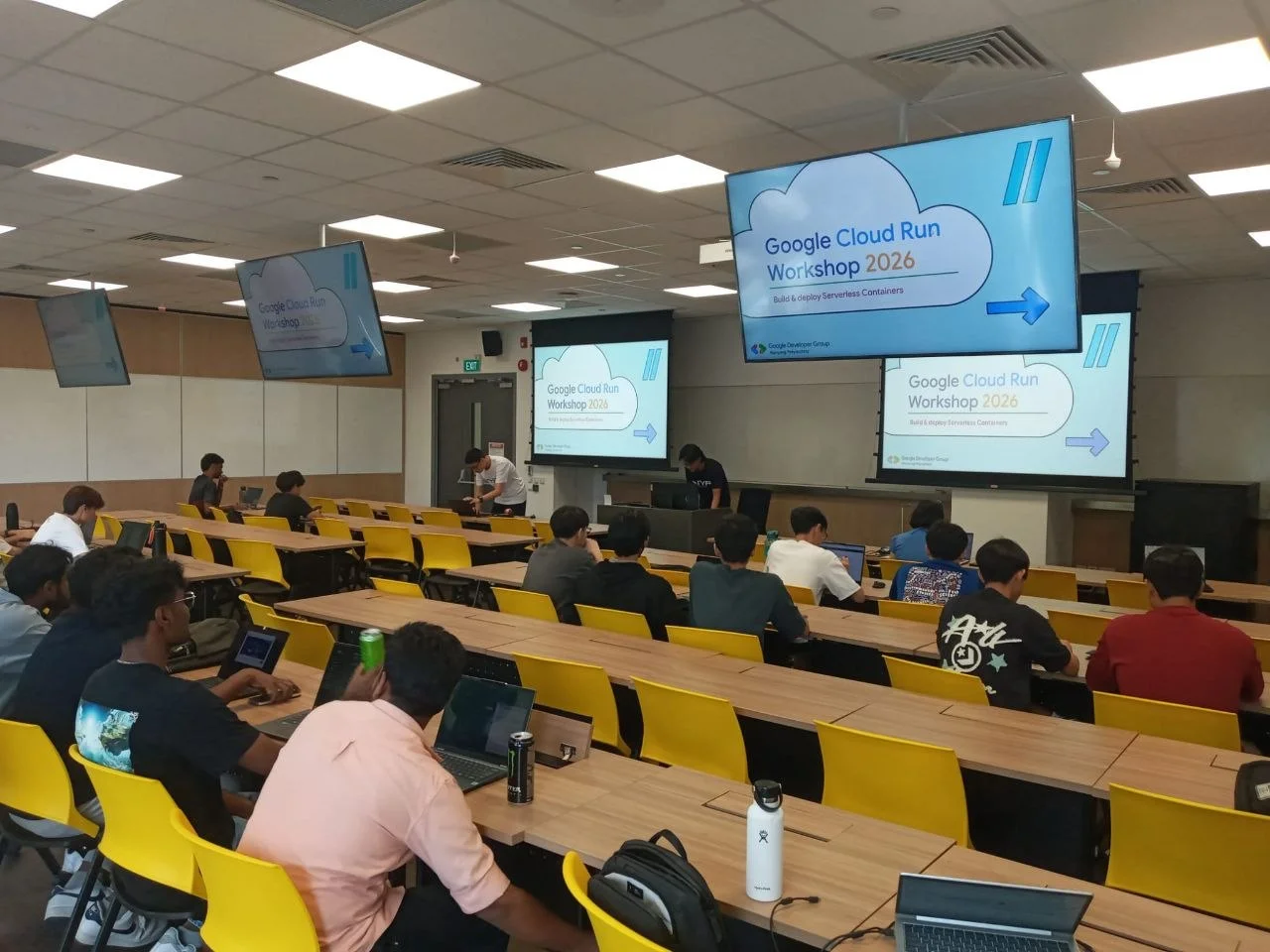
Htet presenting the Google Cloud Run Workshop to NUS students at the National University of Singapore
Presenting serverless container architecture and guiding NUS university students through terminal commands, multi-stage Docker builds, and live Cloud Run deployments.
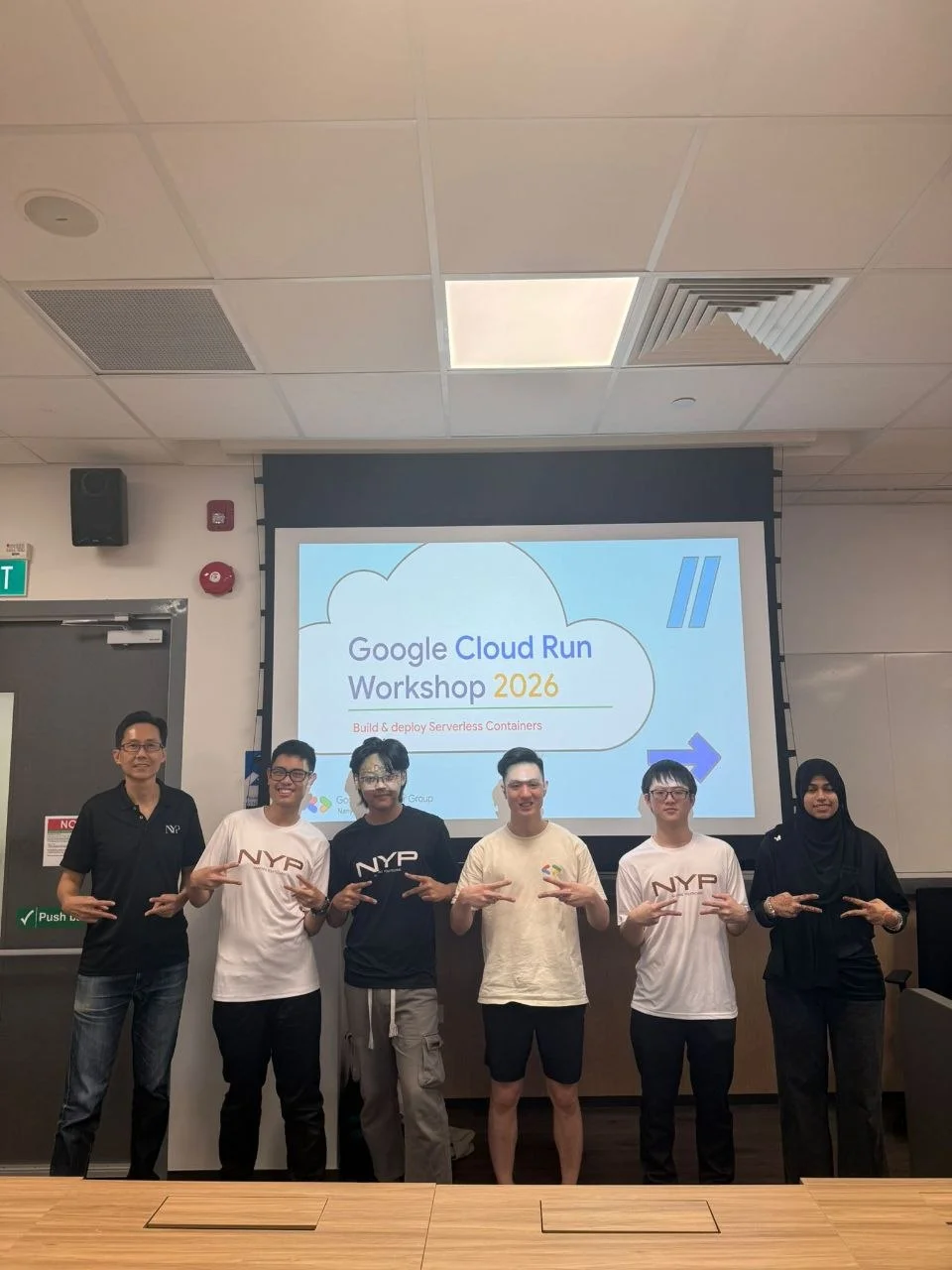
NYP Google Developer Group organizing and presenter team at NUS
The NYP Google Developer Group organizing team at the NUS venue following the delivery of the Google Cloud Run Workshop 2026.
Cohort Representative

Class Representative (Year 1)

Coordinated cohort feedback and bridged communication with academic mentors across both Year 1 semesters, while organizing class bonding events to foster strong peer support and collaboration within the diploma.

Across software and analytics

Software and analytical skills.

Languages
Python, C#, JavaScript, TypeScript, SQL
Software & web
React, Node.js, Express, Flask, HTML, CSS, Git, Pytest
Analytics & BI
Power BI, Power Query, DAX, KNIME, Excel, SAS Viya, dimensional modeling, data cleaning, feature engineering
Databases & cloud
PostgreSQL, SQLite, MySQL, MongoDB, Oracle SQL, Snowflake, Oracle Cloud, AWS
AI & machine learning
NumPy, automatic differentiation, neural networks, AI model API integration and orchestration, speech-to-text and image-generation workflows, FFmpeg, Streamlit
Statistical methods
Descriptive statistics, hypothesis testing, correlation analysis, regression, model evaluation, scenario analysis